
Asset Disposal Define, Example, Journal Entries

Company A purchased a specialized trading terminal for $4 million on 1 January 2006. The company expected the system HOA Accounting to last 5 years and generate a residual value of $0.5 million. If the asset is no longer usable and has no resale value, it is written off. Assets that are destroyed due to accidents, fires, or natural disasters are removed from the records. Technological advancements may render an asset outdated, making it more cost-effective to replace rather than maintain. If the person receives a capital sum by way of compensation or otherwise by reference to the fixture, the disposal value of the fixture is that capital sum.
Factors Affecting Disposal Value
It’s more than just throwing things away – it’s about removing assets the right way to keep your finances clean and your operations smooth. From selling to scrapping or even trading, the disposal process plays a big role in smart Financial Management. In this blog, we will discuss what Asset Disposal means, why it matters, and how it’s done. Another way to reduce the cost of disposal is to segregate and sort your waste according to its type, quality, and destination.
Determining the Book Value of the Asset
A company may dispose of a fixed asset by trading it in for a similar asset. The company receives a trade-in allowance for the old asset that may be applied toward the purchase of the new asset. It is fully depreciated after five years of ownership since its Accumulated Depreciation credit balance is also $35,000. The equipment will be disposed of (discarded, sold, or traded in) on 10/1 in the fourth year, which is nine months after the last annual adjusting entry was journalized. The first step is to journalize an additional adjusting entry on 10/1 to capture the additional nine months’ depreciation. Disposal value should be recalculated whenever there are significant changes in market conditions, asset depreciation, or other relevant factors.
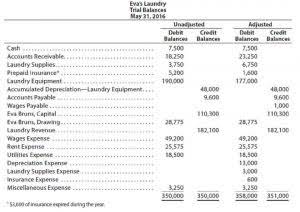
Fixed Asset Disposal
There are different disposal options available, such as landfill, incineration, composting, recycling, or donation. Each disposal option has its own advantages and disadvantages, as well as costs and benefits. For example, landfill is the cheapest and most common disposal option, but it also has the highest environmental and social impact. Incineration is the most efficient and sanitary disposal option, but it also has the highest operational and maintenance cost. Composting is the most natural and eco-friendly disposal option, but it also has the lowest capacity and quality. Recycling is the most profitable and sustainable disposal option, but it also has the highest technical and logistical requirement.
- In all these instances, it needs to be removed from the company’s financial records through the creation of an asset disposal account.
- Preventive maintenance enhances asset utilization, performance, asset availability.
- Fixed assets, such as machinery, vehicles, and buildings, are used in business operations for extended periods.
- Depending on the asset’s condition, there are several suitable methods of disposing of it.
- Next, compare its book value to the value of what you get for in return for the asset to determine if you breakeven, have a gain, or have a loss.
Asset Disposal Excel Template
If the machine is sold at a higher disposal value value than book value or disposal value it is booked as gain on the sale of machine on the income statement account. The disposal of PPE has accounting implications, as it affects the value of the asset on the balance sheet, as well as cash flow. Understanding how to report this correctly in your cash flow statement ensures that your financial reporting is accurate. The accounting for disposal of fixed assets varies depending on how we dispose of the assets.
- The entity should review and update the disposal value regularly to ensure the accuracy of the depreciation expense calculation.
- From the above example, the net book value of the machinery is $9,000 ($39,000 – $30,000).
- Prior to discussing disposals, the concepts of gain and loss need to be clarified.
- In accounting terms, the asset disposal value is the value at which the asset is sold when an asset is no longer useful.
- If an asset reaches the end of its life or is no longer used, recording the disposal of the asset is important in making sure your accounting records are up to date.
Conversely, in the case of loss, the relevant asset disposal account is credited, while the asset and Profit & Loss A/c are debited. In the ever-evolving landscape of financial management, optimizing asset disposal strategies is a critical component of achieving long-term success. Whether you’re an individual investor, a business owner, or a financial analyst, understanding how to efficiently dispose of assets can significantly impact your bottom line. In this section, we delve into the nuances of asset disposal, exploring various perspectives and practical approaches to maximize gains and minimize losses. When calculating gain or loss, it is essential to consider the tax implications.

The equipment will be disposed of (discarded, sold, or traded in) on 4/1 in the fourth year, which is three months after the last annual adjusting entry was journalized. The first step is to journalize an additional adjusting entry on 4/1 to capture the additional three months’ depreciation. Since the annual depreciation amount is $1,200, the asset depreciates at a rate of $100 a https://scuderiarchitettura.it/what-is-a-stale-check/ month, for a total of $300.

Asset Quality Rating is a crucial aspect in the financial industry, providing an evaluation of the… Free accounting tools and templates to help speed up and simplify workflows. 2) Accumulated depreciation of the asset will have to be disposed of. If an employer transfers an asset to an employee and claims that the disposal value is nil, you should check that the transfer is really a gift. A gift is a transfer from one person to another for no consideration (see CG12920 and CG66451). You should also remember that there is a nil disposal value only where an asset is gifted to an employee.
The value of the old asset is used as part of the cost for the new item. Normal Disposal happens when an asset is no longer useful and is either scrapped, sold, or given away. The company removes the asset from its records and notes any gain or loss from the transaction. When assets are in a nonproductive stage and no longer able to fulfill its primary objective then it needs to be disposed of.